
How Do You Balance Writing for Humans with Writing for Search Engines?
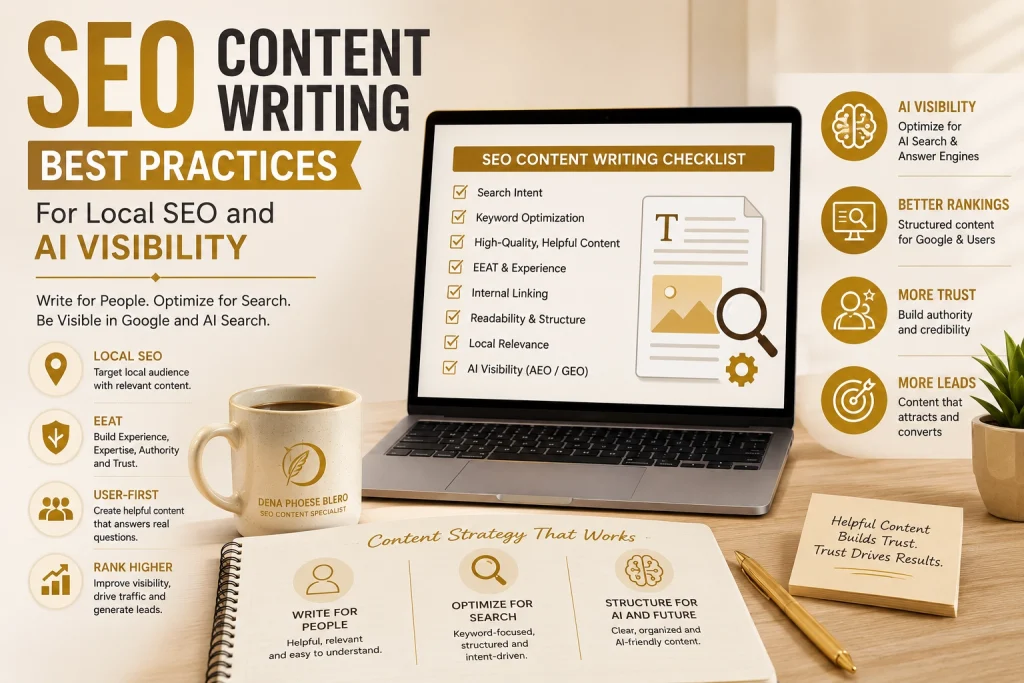
Good SEO content is not about choosing between people and search engines. It is about helping both understand your content clearly.
Many beginners think that writing for search engines means adding keywords as many times as possible. But that approach can make content sound unnatural, repetitive, and difficult to read. On the other hand, writing only for readers without considering SEO can make it harder for your content to appear in search results.
The best approach is balance. You need content that answers real questions, uses keywords naturally, follows search intent, and gives readers a smooth experience from start to finish.
What Does Writing for Search Engines Mean?
Writing for search engines means creating content that Google and other search engines can understand, organize, and rank properly.
This includes using relevant keywords, clear headings, helpful structure, internal links, optimized titles, and content that matches what users are searching for.
However, writing for search engines does not mean writing robotic content. Search engines are designed to reward helpful content that satisfies the reader. This means your content still needs to be clear, useful, and easy to follow.
What Does Writing for Humans Mean?
Writing for humans means creating content that real people can understand and enjoy reading.
This focuses on readability, natural language, helpful explanations, short paragraphs, and clear answers. Readers should not feel like they are reading content made only to rank on Google.
Human-focused writing answers questions directly, explains ideas simply, and guides the reader through the topic without confusion.
Why You Need to Balance Both
If your content is only written for search engines, it may feel forced. Readers may leave quickly because the content does not feel natural or helpful.
If your content is only written for humans without SEO, it may be useful but difficult to find online.
Balancing both helps your content become visible in search results while still providing value to readers. This is important for local businesses, service providers, and SEO content strategists who want to attract the right audience.
Start with Search Intent
The first step is understanding search intent. Search intent refers to the reason behind a user’s search.
For example, someone searching for “writing for search engines” may want to understand how SEO writing works, how to use keywords properly, or how to write content that ranks without sounding unnatural.
Before writing, ask yourself:
- What does the reader want to learn?
- What problem are they trying to solve?
- What type of content do they expect?
- What information should be included to fully answer the query?
When your content matches search intent, it becomes more useful for readers and easier for search engines to recognize as relevant.
Use Keywords Naturally
Keywords are still important, but they should be used in a natural way.
The target keyword should appear in important areas such as the title, introduction, headings, meta description, and body content. However, it should not be repeated too much.
For example, instead of forcing the phrase “writing for search engines” in every paragraph, you can also use related terms such as:
-
- SEO writing
-
- keyword optimization
-
- readable content
-
- search-friendly content
-
- content readability
-
- SEO content strategy
This helps your content sound more natural while still supporting keyword relevance.
Write Clear and Helpful Headings
Headings help both readers and search engines understand your content structure.
For readers, headings make the article easier to scan. For search engines, headings provide context about the main topics covered on the page.
Use headings to organize your article into clear sections. Each heading should describe what the section is about.
Instead of vague headings like “Important Things to Know,” use specific headings like “Use Keywords Naturally” or “Improve Readability with Short Paragraphs.”
Clear headings improve the reading experience and help search engines understand your content better.
Keep Sentences and Paragraphs Easy to Read
Readability is one of the most important parts of SEO content.
Even if your article has strong keywords, readers may leave if the content is too difficult to read. Long paragraphs, complicated words, and unclear explanations can make users lose interest.
To improve readability:
-
- Use short paragraphs.
-
- Write in simple language.
-
- Avoid unnecessary jargon.
-
- Break down complex ideas.
-
- Use examples when needed.
-
- Make each section easy to scan.
Readable content keeps people on the page longer and helps them find answers faster.
Place Keywords in the Right Areas
Keyword placement matters more than keyword repetition.
Your main keyword should be used in strategic areas, including:
-
- Title tag
-
- Meta description
-
- H1 heading
-
- First 100 words
-
- At least one H2 heading, if natural
-
- Image alt text
-
- URL slug
-
- Body content
This helps search engines identify the main topic of your page without making the content feel stuffed with keywords.
Focus on Answering the Reader’s Question
The main goal of SEO content is to provide a useful answer.
Before adding more keywords, ask yourself if the content fully answers the topic. A helpful article should explain the concept, give practical advice, and guide the reader clearly.
For this topic, the reader wants to know how to balance readability and keyword optimization. That means the content should explain both sides and show how they work together.
When the content answers the reader’s question well, it has a better chance of performing in search.
Avoid Keyword Stuffing
Keyword stuffing happens when a keyword is repeated too many times in an unnatural way.
This can make content sound awkward and may hurt the user experience.
For example:
“Writing for search engines is important because writing for search engines helps your content rank. If you are writing for search engines, you need to focus on writing for search engines properly.”
This sounds forced and difficult to read.
A better version would be:
“Writing for search engines means making your content easy for Google to understand while still keeping it useful and natural for readers.”
The second version is clearer, more helpful, and easier to read.
Use Internal Links to Support SEO
Internal links connect one page on your website to another related page.
For example, if you are writing about SEO content strategy, you can link to related articles about keyword research, content ranking time, short-tail and long-tail keywords, or SEO case studies.
Internal links help readers explore more useful content. They also help search engines understand the relationship between your pages.
When using internal links, make sure the anchor text is clear and relevant.
Optimize for Featured Snippets
A featured snippet is a short answer that appears at the top of some Google search results.
To improve your chances of appearing in a featured snippet, provide direct answers to common questions.
For example:
How do you balance writing for humans and search engines?
You balance writing for humans and search engines by matching search intent, using keywords naturally, writing clear headings, improving readability, and providing helpful answers that satisfy the reader’s query.
Adding short answer sections like this can make your content more useful and easier for search engines to understand.
Make the Content Easy to Scan
Most online readers do not read every word. They scan the content first to see if it answers their question.
That is why structure matters.
Use clear headings, short paragraphs, bold text, bullet points, and simple explanations. This helps readers quickly find the information they need.
Search-friendly content should not feel heavy or overwhelming. It should guide the reader smoothly from one idea to the next.
Add Real Value Beyond Keywords
SEO content should not only repeat what other pages already say. It should provide helpful insight, examples, and practical advice.
For example, instead of only saying “use keywords naturally,” explain where to place them, how often to use them, and what to avoid.
This makes your content more valuable and trustworthy.
The stronger the value, the more likely readers are to stay, share, and take action.
Balance SEO and Readability with This Simple Process
A good SEO content process can help you balance both sides.
Start by researching the main keyword and related keywords. Then study the search intent behind the topic. After that, create a clear outline with helpful headings.
When writing the first draft, focus on answering the reader’s question. Once the content is complete, optimize it for keywords, internal links, meta description, and readability.
This process helps you avoid writing content that feels too mechanical.
Common Mistakes to Avoid
One common mistake is adding the keyword too many times. This can make the content sound unnatural.
Another mistake is writing long sections without headings. This makes the article harder to read and scan.
Some writers also focus too much on word count instead of usefulness. A longer article is not always better. What matters most is whether the content answers the topic clearly.
Another mistake is ignoring search intent. Even if the content is well-written, it may not rank if it does not match what users are looking for.
Best Practices for Writing for Humans and Search Engines
The best way to balance both is to treat SEO as a guide, not a replacement for good writing.
Use keywords to support your content, but let the reader’s needs lead the article.
Your content should be:
-
- Clear
-
- Helpful
-
- Well-structured
-
- Easy to read
-
- Optimized naturally
-
- Relevant to search intent
-
- Supported with internal links
-
- Focused on solving the reader’s problem
When these elements work together, your content becomes useful for both people and search engines.
Need SEO Content That Ranks and Reads Naturally?
Creating content that works for both readers and search engines takes the right balance. Your content should be clear, helpful, keyword-optimized, and easy to understand.
If you need support with SEO content strategy, keyword optimization, or blog content that connects with your audience, working with an SEO content strategist can help you create content with a clear purpose.
Let’s build content that is written for people, optimized for search engines, and designed to support your business goals.