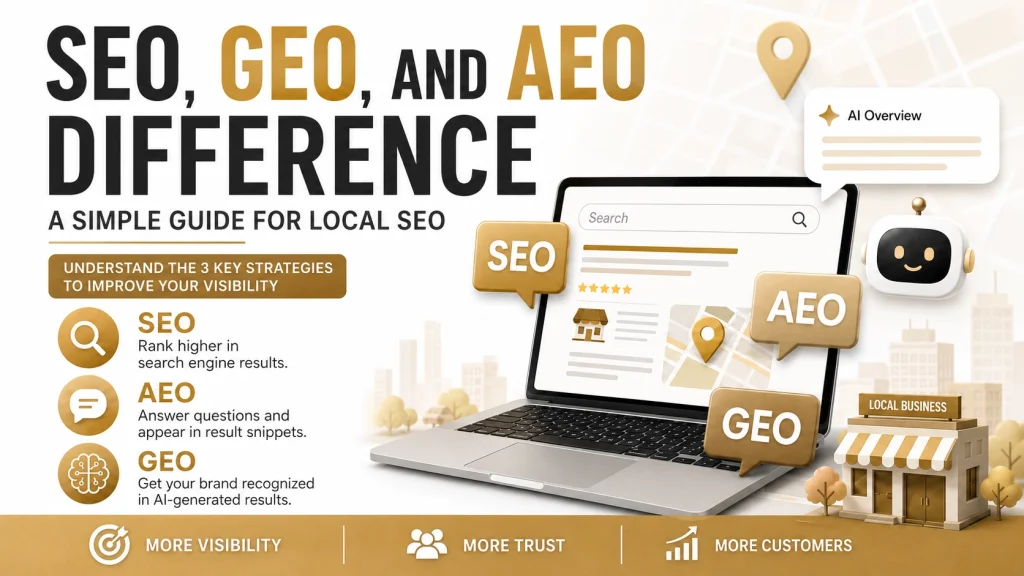

SEO content writing is no longer limited to ranking on traditional Google search results. Today, content also needs to be structured for AI-powered search experiences such as AI Overviews, ChatGPT, Gemini, Perplexity, and other answer engines.
This is where AI visibility strategy becomes important.
AI visibility focuses on making your content easier for search engines and AI systems to understand, extract, summarize, and recommend. Instead of writing only for blue-link rankings, your content should also provide clear answers, trustworthy explanations, and well-structured information that AI tools can confidently use.
For local SEO, this matters even more. When users ask AI tools questions like “Who is the best SEO content specialist in the Philippines?” or “How do I write SEO content for a local business?”, your content needs to show topical expertise, local relevance, and trust signals.
Answer the Main Question Early
AI search tools often look for clear, direct answers. That means your content should answer the main topic near the beginning of the article.
For example:
SEO content writing best practices include matching search intent, using keywords naturally, applying EEAT, adding internal links, improving readability, and structuring content so both users and search engines can understand it clearly.
This type of answer is useful because it is concise, complete, and easy to summarize.
Use Definition-Based Sections
AI systems understand content better when important terms are clearly defined. Add short definition sections for key concepts.
Examples:
What is SEO content writing?
SEO content writing is the process of creating helpful website content that answers user questions, targets relevant keywords, supports search visibility, and guides readers toward meaningful action.
What is AI visibility?
AI visibility is the process of optimizing content so it can be discovered, understood, summarized, and referenced by AI-powered search tools and answer engines.
What is local SEO content?
Local SEO content is website content created to help a business appear for searches connected to a specific location, service area, or local audience.
Add Summary Blocks for AI Extraction
Summary blocks help both human readers and AI systems identify the main point of a section quickly.
Example:
Quick Summary:
The best SEO content is written for people first, but structured clearly enough for search engines and AI tools to understand. For local SEO, this means combining search intent, local relevance, EEAT, internal links, and practical examples.
You can add summary blocks after major sections, especially for longer articles.
Use Question-Based Headings
Many AI searches are phrased as questions. Adding question-based headings helps your content match conversational search behavior.
Examples:
- What are SEO content writing best practices?
- How does SEO content writing help local SEO?
- How can AI visibility improve SEO content?
- Why does EEAT matter in AI search?
- How do you structure content for AI Overviews?
- What makes local SEO content trustworthy?
This improves your chance of appearing for long-tail searches and AI-generated answers.
Add First-Hand Experience Signals
AI visibility is stronger when your content does not sound generic. Add real workflow details that show your experience as an SEO Content Specialist.
Example:
“In my SEO content workflow, I usually start by identifying the search intent behind the keyword, checking the current SERP structure, grouping related questions, and building an outline that answers the user’s main query before adding supporting details.”
This kind of first-hand explanation supports EEAT because it shows that the content is based on actual SEO work, not only general definitions.
Include Local Authority Signals
For your site, the content should connect naturally to your location and service market.
Example:
“As an SEO Content Specialist in the Philippines, I create content for businesses that need stronger organic visibility, clearer service pages, and blog posts that can support both traditional SEO and AI-powered search discovery.”
This helps position your site for both local SEO and AI visibility.
Structure Content for Featured Snippets and AI Answers
To improve AI visibility, use formats that are easy to extract:
- Short definitions
- Numbered steps
- Bullet-point checklists
- Comparison tables
- FAQs
- Clear summaries
- Direct answers
- Practical examples
Avoid large blocks of text with unclear headings. AI tools and readers both benefit from content that is organized and easy to scan.
Add Entity-Based Optimization
AI-powered search systems look at topics, entities, and relationships, not just keywords. For this article, include related entities such as:
- SEO content writing
- Local SEO
- Search intent
- EEAT
- On-page SEO
- Internal linking
- Content strategy
- AI visibility
- Answer engine optimization
- Generative engine optimization
- Google Business Profile
- Organic traffic
- Conversion-focused content
Using these naturally helps search engines understand the full topic of the page.
Strengthen Trust With Author and Process Details
AI visibility depends heavily on trust. Add an author section or expert note near the end of the article.
Example:
Author Note:
This guide was written by Dena Phoese Blero, an SEO Content Specialist who helps businesses, SEO agencies, and GEO specialists create search-driven content for organic visibility, topical authority, and lead generation.
You can also add a short “How I approach SEO content writing” section to show your process.
Add an AI Visibility Checklist
Before publishing SEO content, check if the article is ready for AI-powered search.
AI Visibility Checklist:
- Does the article answer the main question clearly?
- Does it include short definitions?
- Are the headings written in a question-based or topic-based format?
- Does the content include practical examples?
- Are EEAT signals visible?
- Is the author or business expertise clear?
- Are local relevance and service context included?
- Does the article include FAQs?
- Are internal links added naturally?
- Can a reader understand the main answer within the first few paragraphs?
- Is the content structured for both people and AI search engines?
Why AI Visibility Should Be Part of SEO Content Writing
AI visibility is becoming an important part of SEO because users now search in more conversational ways. They do not only type keywords into Google. They ask full questions, compare options, request recommendations, and expect direct answers.
For local businesses and service providers, this means content must be clear, trustworthy, and easy to interpret.
The future of SEO content writing is not about choosing between Google rankings and AI visibility. It is about creating content that supports both. A strong SEO article should be helpful for readers, optimized for search engines, and structured well enough for AI systems to understand and reference.