Local SEO helps businesses appear in search results when people look for products or services in a specific area. It is especially important for service providers, small businesses, freelancers, and brands that rely on local visibility.
For SEO specialists, content writers, and beginners, understanding local SEO factors makes it easier to create pages that rank, attract qualified traffic, and support real business inquiries.
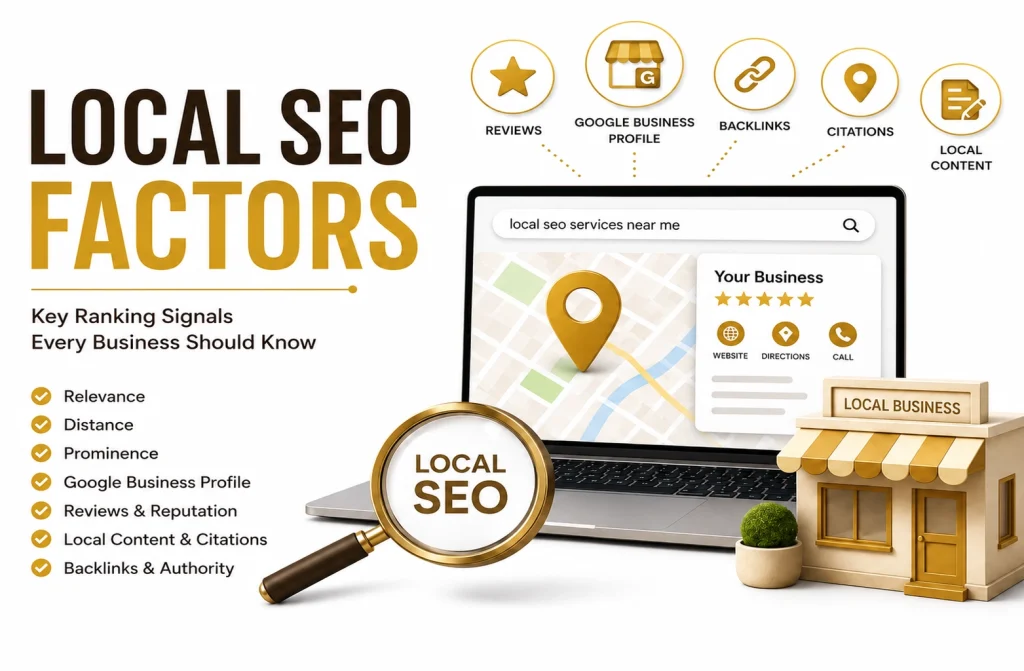
Google evaluates local results mainly through three signals: relevance, distance, and prominence. Your job as an SEO specialist or content writer is to make those signals clear across the website, Google Business Profile, reviews, citations, and content.
What Are Local SEO Factors?
Local SEO factors are signals that help search engines understand whether a business is a good match for a local search.
Examples of local searches include:
- local SEO specialist in the Philippines
- SEO content writer in Iligan City
- dentist near me
- furniture store in Singapore
- best café in Cebu
These searches show local intent. The user is not just looking for information. They are looking for a provider, place, or service connected to a specific location.
The 3 Main Local SEO Ranking Factors
1. Relevance
Relevance measures how well your business matches the search query.
To improve relevance, make sure your website and Google Business Profile clearly explain:
- What services you offer
- Who you help
- Where you operate
- What problems you solve
- Why people should choose you
For content writers, this means writing specific and useful content instead of generic service descriptions.
Weak example:
We offer SEO services.
Better example:
I provide SEO content writing and local SEO support for businesses that want to improve visibility in Google Search and Maps.
The second version is clearer because it explains the service, audience, and purpose.
2. Distance
Distance refers to how close a business is to the searcher or the location used in the query.
You cannot fully control this factor, but you can help Google understand your service area by keeping your location details accurate.
To support distance signals:
- Add your correct address or service area
- Mention real locations you serve
- Keep contact details consistent
- Avoid fake locations
- Use location pages only when they are useful and unique
For service-based businesses, explain whether you serve clients locally, nationwide, or remotely.
3. Prominence
Prominence refers to how trusted and well-known your business appears online.
Prominence can be influenced by:
- Reviews
- Backlinks
- Brand mentions
- Local citations
- Directory listings
- Website authority
- Helpful content
- Consistent business information
A business with strong reviews, accurate listings, and useful content is easier for both users and search engines to trust.
Google Business Profile Optimization
Your Google Business Profile is one of the most important local SEO assets.
A complete profile should include:
- Business name
- Business category
- Description
- Address or service area
- Phone number
- Website link
- Opening hours
- Photos
- Services
- Reviews
- Updates or posts
Keep the information accurate. Do not add keywords to your business name unless they are part of your real business name.
Local Keyword Optimization
Local keywords connect your services with your target location.
Examples:
- local SEO services Philippines
- SEO content writer Iligan City
- Google Business Profile optimization
- SEO services for small businesses
- local SEO consultant Philippines
Use local keywords naturally in:
- SEO title
- Meta description
- H1
- H2 headings
- Introduction
- Body content
- FAQs
- Image alt text
- Internal links
Avoid repeating the same location too often. The content should still sound natural and useful.
Localized Website Content
Local SEO content should reflect the area, audience, and service being targeted.
Useful local content types include:
- Service pages
- Location pages
- Local SEO guides
- Pricing guides
- Case studies
- FAQs
- Comparison articles
- Industry-specific blog posts
For example, an SEO content writer targeting local businesses can create content about how small businesses in the Philippines can improve Google visibility through blogs, service pages, and Google Business Profile optimization.
Good local content is specific. It should not feel like a copied template with only the city name changed.
NAP Consistency
NAP means:
- Name
- Address
- Phone number
Your NAP details should be consistent across your website and other online platforms.
Check these areas:
- Contact page
- Google Business Profile
- Facebook page
- LinkedIn page
- Business directories
- Map listings
- Local citations
Inconsistent details can confuse users and weaken trust signals.
Reviews and Reputation
Reviews help users decide whether to contact a business. They also support local trust.
Strong review signals include:
- Recent reviews
- Positive feedback
- Specific comments
- Owner responses
- Consistent review growth
Encourage real customers to leave honest reviews after a completed service. Avoid fake reviews or review manipulation.
A useful review is specific. For example, a review mentioning “local SEO,” “content writing,” or “Google visibility” gives clearer context than a generic comment.
Local Citations
Local citations are online mentions of your business name, address, phone number, or website.
Common citation sources include:
- Google Business Profile
- Bing Places
- Apple Business Connect
- Yelp
- Yellow Pages
- Local directories
- Industry directories
Focus on quality and accuracy. A few trusted listings are better than many low-quality directories.
On-Page SEO for Local Pages
A strong local page should be clear, structured, and helpful.
Important on-page elements include:
- One clear H1
- Local keyword in the title
- Helpful introduction
- Clear service explanation
- Location details
- Trust signals
- Internal links
- FAQs
- Strong call-to-action
Example structure:
H1 Local SEO Services in the Philippines
H2 Helping Local Businesses Improve Google Visibility
H2 What Is Included in Local SEO?
H2 Who Needs Local SEO?
H2 Why Local SEO Matters
H2 Frequently Asked Questions
This structure helps readers scan the page and helps search engines understand the topic.
Schema Markup
Schema markup gives search engines extra context about your page.
For local SEO, useful schema types include:
- LocalBusiness
- Organization
- Service
- FAQPage
- BreadcrumbList
- WebSite
Schema does not guarantee rankings, but it can improve how search engines understand your business and content.
Use schema only when it matches the visible content on the page.
Local Backlinks
Backlinks from relevant local or industry websites can improve authority.
Good local backlink sources include:
- Local blogs
- Business directories
- Industry websites
- Local news sites
- Partner websites
- Event pages
- Professional associations
- Guest posts
For example, an SEO specialist can earn links by contributing helpful articles, joining business directories, publishing case studies, or collaborating with local businesses.
Mobile Experience
Many local searches happen on mobile. Users may want to call, book, visit, or compare options quickly.
Your local pages should be:
- Fast
- Mobile-friendly
- Easy to read
- Easy to navigate
- Clear with contact details
- Supported by visible calls-to-action
Useful CTAs include:
- Book a consultation
- Request an SEO audit
- Call now
- Send an inquiry
- View services
- Get directions
Good local SEO should not only bring traffic. It should help users take the next step.
Internal Linking
Internal links help users and search engines move through your website.
For an SEO content specialist website, useful internal links may point to:
- SEO content services
- Local SEO services
- Blog writing services
- Case studies
- Portfolio
- About page
- Contact page
Internal links should be natural and relevant. Use them to guide readers toward related services or helpful resources.
EEAT for Local SEO
EEAT stands for:
- Experience
- Expertise
- Authoritativeness
- Trustworthiness
For local SEO content, EEAT can be shown through:
- Real examples
- Case studies
- Author bio
- Client results
- Clear contact details
- Service process
- Testimonials
- Helpful explanations
- Accurate business information
If you are building your personal SEO website, your content should show your actual experience and workflow. This helps visitors understand why they should trust your services.
Common Local SEO Mistakes
Avoid these mistakes:
- Keyword stuffing
- Fake business locations
- Thin location pages
- Duplicate city pages
- Inconsistent contact details
- Ignoring Google Business Profile
- Not asking for reviews
- Poor mobile experience
- Weak service descriptions
- No internal linking
- No clear CTA
Local SEO works best when the content is accurate, useful, and aligned with real search intent.
Local SEO Checklist
| Local SEO Factor | What to Check |
| Google Business Profile | Complete and accurate profile |
| Business Category | Correct primary and secondary categories |
| NAP Details | Consistent name, address, and phone number |
| Local Keywords | Natural use of service and location terms |
| Reviews | Recent, honest, and specific customer feedback |
| Website Content | Clear service and location information |
| Local Pages | Unique and helpful content for each target area |
| Schema Markup | Relevant structured data |
| Internal Links | Connected service, blog, and contact pages |
| Mobile Experience | Fast, readable, and easy to contact |
| Backlinks | Relevant local or industry links |
| CTA | Clear next step for users |
How to Build Stronger Local SEO Visibility
Local SEO is built on clarity, trust, and consistency.
To improve local visibility, make sure your business information is accurate, your content answers local search intent, and your online presence supports credibility. For SEO specialists and content writers, the goal is not to overuse location keywords. The goal is to make the business easier to understand, easier to find, and easier to trust.
A strong local SEO strategy connects the website, Google Business Profile, reviews, citations, and content into one clear message: who you help, what you offer, and where you serve.